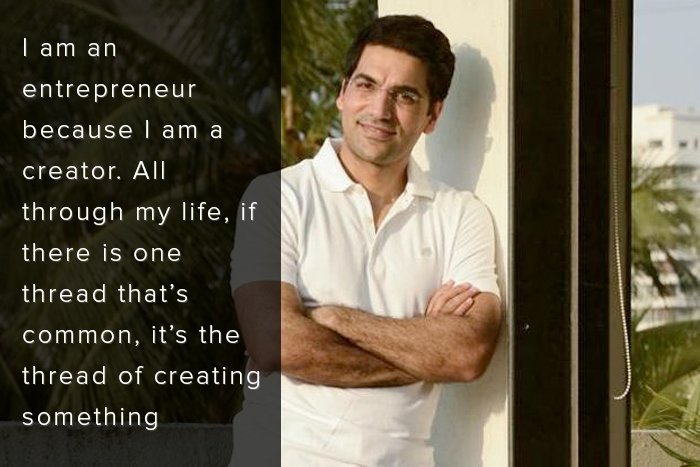

In India, over 550 million citizens suffer from uncorrected refractive vision errors. For decades, optical eyewear was treated as a clinical punishment—sold in cramped, dusty shops with arbitrary pricing, delayed delivery times, and zero transparency. Peyush Bansal looked past the commercial storefront and identified a profound civilizational injustice: clear vision is not a luxury commodity; it is a fundamental human right that unlocks literacy, employment, and human potential.
Act I: McGill University, Microsoft, and The Problem-Solver
Peyush began his journey far from retail shop floors. After completing his degree in Electrical Engineering from McGill University in Montreal, Canada, he joined Microsoft headquarters in Redmond as a program manager. While the corporate prestige and lucrative compensation were enviable, Peyush felt an overwhelming urge to solve fundamental human problems in developing nations. In 2007, he walked away from Microsoft and returned home to India.
Act II: The Garage Startup & The 2010 Launch of Lenskart
After experimenting with online classifieds for university students (SearchMyCampus) and contact lens delivery (Flynn), Peyush founded Lenskart in November 2010. The initial hypothesis was radical: could Indian consumers be persuaded to purchase prescription eyeglasses over the internet without visiting an optometrist? Skeptics were vocal, claiming optical frames required tactile fitting. In response, Peyush engineered an innovative solution: home eye check-ups with certified optometrists carrying portable digital refractometers.
Act III: The Omnichannel Revolution & 3D Virtual Try-On
Recognizing that pure e-commerce could never capture the vast majority of Indian buyers, Peyush pioneered one of the world's most successful omnichannel retail strategies. Lenskart rolled out sleek, illuminated studios offering free eye check-ups, zero-pressure browsing, and unified digital pricing. Online and offline inventory were merged seamlessly: a customer could get their eyes tested in a physical studio, select frames using AI 3D face-mapping on the mobile app, and receive precision-cut glasses at their doorstep within 48 hours.
Act IV: The Bhiwadi Megafactory: World-Class Robotic Automation
To eliminate reliance on fragmented third-party lens suppliers, Peyush executed an audacity play: building the world’s largest automated eyewear manufacturing mega-facility in Bhiwadi, Rajasthan. Spanning hundreds of thousands of square feet and powered by robotic CNC edging machinery imported from Germany and Japan, the facility cuts, shapes, and coats millions of optical lenses with zero-error laser precision, drastically driving down production costs while elevating optical accuracy.
Act V: Global Conquest & The Owndays Acquisition
Peyush did not stop at Indian borders. He methodically expanded Lenskart into Southeast Asia and the Middle East, establishing dominant retail footprints in Singapore, the UAE, and Saudi Arabia. In 2022, in a defining cross-border transaction, Lenskart acquired a majority stake in Japanese eyewear leader Owndays in a $400 million deal, creating one of the largest optical retail monoliths across Asia.
Act VI: The Empathic Shark: Shark Tank India
As a core shark on Shark Tank India, Peyush Bansal became beloved for his deep empathy, intellectual rigor, and unwavering commitment to backing problem-solvers over balance-sheet vanity. His landmark investment in Jugadu Kamlesh (KG Agrotech)—a rural innovator who designed a multi-purpose pesticide cart to protect farmers' physical health—resonated across the world, demonstrating that venture capital can be a profound force for human dignity.
Act VII: Industry Transformation & Strategic Legacy
- Demystified & Democratized Eyewear: Replaced opaque, arbitrary optical markups with radical pricing transparency and free clinical eye exams across 2,500+ studios.
- World-Class Industrial Architecture: Constructed the world’s most advanced automated optical manufacturing plant in India, processing tens of thousands of custom glasses daily.
- Global Cross-Border Scaling: Proved that an Indian consumer technology enterprise can acquire and integrate premium multinational brands across Japan, Singapore, and the Gulf.