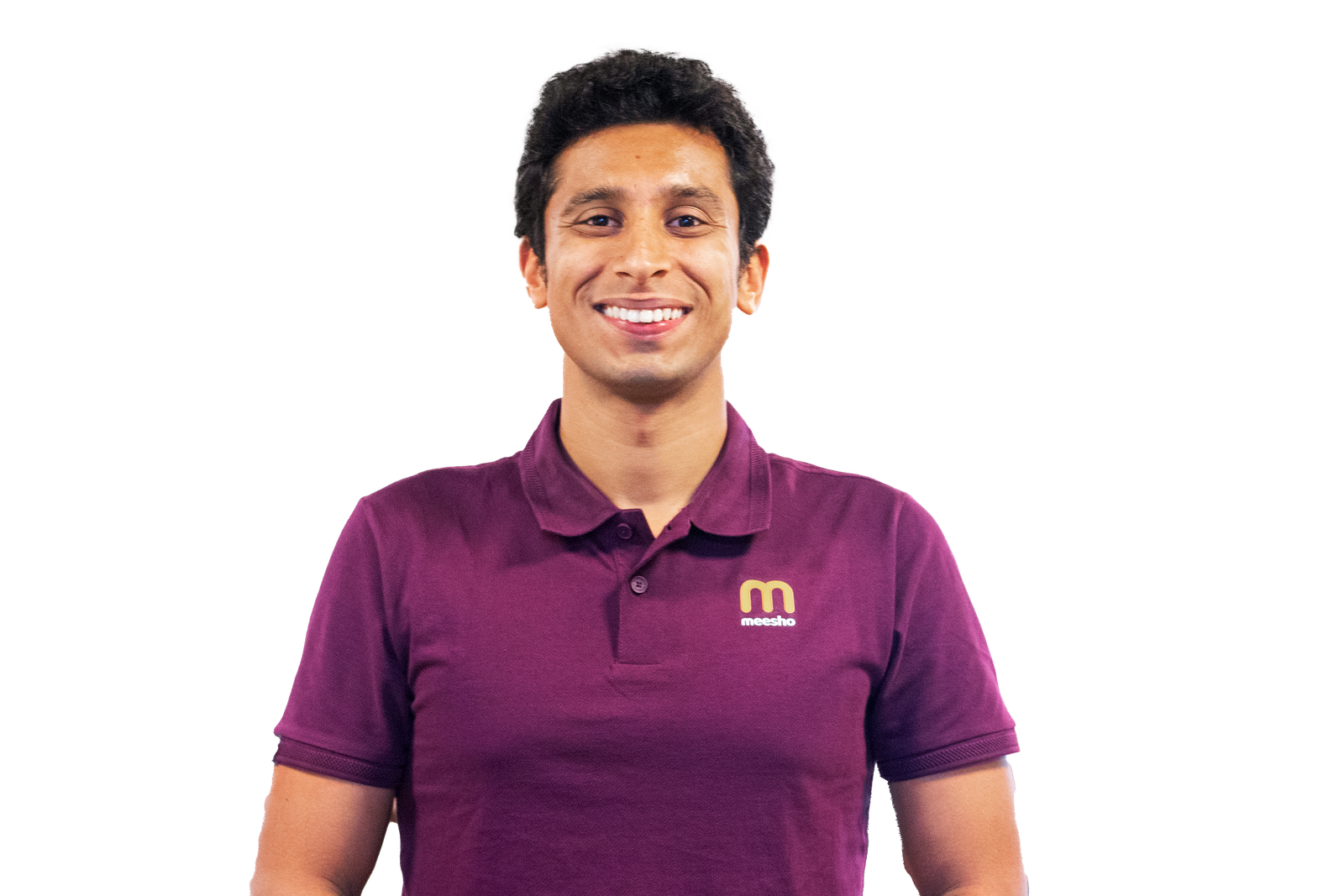

When Amazon and Flipkart were spending billions competing for the top 50 million affluent English-speaking shoppers in India’s tier-1 metros, Vidit Aatrey looked in the opposite direction. Born in a small town in Western Uttar Pradesh, Vidit knew that 90% of India lived in non-metro towns, had modest household incomes, shopped unbranded goods, and communicated through vernacular WhatsApp messages. Alongside IIT Delhi batchmate Sanjeev Barnwal, Vidit built Meesho into the most downloaded e-commerce app on planet Earth, empowering millions of women micro-entrepreneurs.
Act I: IIT Delhi, ITC, and The Fashnear Pivot
A civil engineering graduate from IIT Delhi, Vidit began his career in the operations division of ITC. In 2015, he reunited with Sanjeev Barnwal to build Fashnear—an app designed to help local fashion boutiques in Bengaluru sell online. The venture failed within months: fashion retailers didn't want local delivery; they wanted customers across India. Observing shopkeepers uploading pictures of sarees to WhatsApp Statuses and closing sales via chat, Vidit had his breakthrough: social commerce.
Act II: The Birth of Meesho: Meri Shop
In late 2015, they launched Meesho (short for 'Meri Shop'). The model was revolutionary: Meesho connected wholesale textile and home-decor manufacturers in Surat, Jaipur, and Ludhiana with millions of stay-at-home mothers and college students across small-town India. A reseller could browse Meesho's wholesale catalog, add her own profit margin, share pictures with friends and neighbors over WhatsApp, and Meesho handled the pickup, delivery, cash collection, and margin deposit.
Act III: The Y Combinator Turning Point
In 2016, Meesho was accepted into Y Combinator in Silicon Valley, becoming one of the earliest Indian startups to graduate from the elite incubator. Returning to India with backing from global venture giants including SoftBank, Prosus, and Fidelity, Vidit scaled the reseller network from thousands to millions, creating financial independence for countless women who had never previously held a bank account.
Act IV: The 0% Commission Disruption
In 2021, Vidit delivered a mortal blow to incumbent marketplace economics: Meesho abolished seller commissions entirely. While Amazon and Flipkart charged sellers 15% to 30% commissions on apparel and home goods, Meesho moved to a 0% commission model, earning revenue through optional ad placements and fulfillment monetization. Hundreds of thousands of small manufacturers migrated to Meesho, passing on immense price savings directly to consumers.
Act V: Reaching Profitability in Bharat
Pundits claimed that low-ticket e-commerce in Bharat (with average order values of ₹250 to ₹350) could never be profitable due to logistics and return-to-origin (RTO) costs. Vidit’s team proved them wrong through extreme algorithmic optimization. Partnering with multi-carrier logistics aggregators and engineering machine learning models to predict return frauds, Meesho became the first horizontal Indian e-commerce unicorn to achieve sustained operational profitability.
Act VI: The Public Market Milestone Ahead
Today, Meesho processes billions of orders annually, with over 80% of transactions originating from Tier-2, 3, and 4 towns like Gorakhpur, Siliguri, and Warangal. Prepping for a landmark public market debut, Vidit stands as the voice of Bharat’s consumer democratization, proving that the true fortune at the bottom of the pyramid is unlocked through dignity and zero-friction technology.
Act VII: Industry Transformation & Strategic Legacy
- Unlocked Non-Metro E-Commerce: Brought over 150 million small-town Indian consumers into the digital transaction economy.
- Economic Autonomy for Women: Empowered over a million female resellers to become self-reliant micro-entrepreneurs from their living rooms.
- Disrupted Platform Take-Rates: Forced the Indian e-commerce landscape to rethink predatory seller commissions through an open 0% commission paradigm.