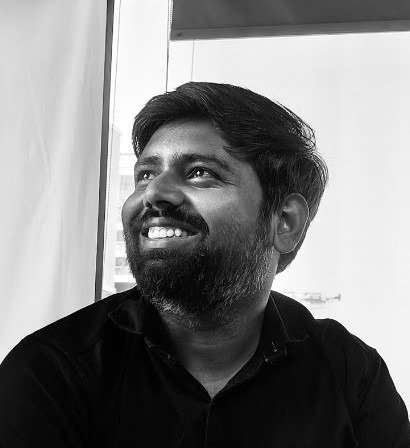
Act I: The Corporate Crucible (NIT Kurukshetra, IIM Lucknow & McKinsey)
Shantanu’s journey did not begin in a glamorous startup incubator. Grounded in a disciplined middle-class upbringing, he earned an engineering degree in Computer Science from NIT Kurukshetra, followed by an MBA from IIM Lucknow in 2011. His analytical rigor earned him an immediate placement at global management consulting titan McKinsey & Company.
Over four and a half years at McKinsey, Shantanu worked across diverse industries—advising telecom providers, banking conglomerates, and supply chain enterprises across India, Southeast Asia, and the United States. He mastered the cold realities of unit economics, contribution margins, retail shelf placement, and consumer psychology. Yet, behind the polished PowerPoint decks and executive advisory reports, Shantanu harbored an obsession to build a consumer brand from scratch that could stand shoulder-to-shoulder with the world's most iconic institutions.
Act II: The Epiphany & Dissecting the Gillette Monolith
In 2015, Procter & Gamble’s Gillette commanded a staggering ~80% market share in India’s wet-shaving industry. The business model was classic "razor-and-blades": sell cheap plastic handles and lock consumers into buying exorbitant multi-blade cartridge refills. Indian men universally accepted razor bumps, ingrown hairs, and synthetic chemical burns as an inescapable daily tax.
Shantanu realized that no one had ever asked Indian men what they actually wanted. What if morning shaving wasn't an annoying obligation to be rushed in five minutes, but an empowering sensory ritual?
Taking inspiration from old-school barbershops and classic European wet shaving, Shantanu resigned from McKinsey, assembled a small team of co-founders, and incorporated Visage Lines in New Delhi. He refused to white-label generic Chinese razors. Instead, he spent nearly nine months working with metallurgy specialists to design the 6-Part Precision Metal Safety Razor—a weighted, perfectly balanced brass handle paired with ultra-sharp Japanese Feather blades that cut hair flush at the skin's surface without tugging.
Around the razor, he engineered a complete shaving ecosystem: pre-shave exfoliating scrubs, non-foaming tea-tree shaving creams, badger-style brushes, and alcohol-free post-shave balms packed with witch hazel and botanical oils.
“Every FMCG veteran told us our launch kit priced at ₹2,995 would fall flat because 'Indian men don't spend on grooming.' Within forty-eight hours of launch, we completely sold out. We didn't just sell razors; we restored pride to the morning mirror.”
Act III: Escaping the Digital Trap (The Omni-Channel Masterstroke)
Between 2016 and 2018, Bombay Shaving Company became an early darling of India’s direct-to-consumer (D2C) boom. But Shantanu possessed a consultant’s ruthlessness about numbers: while digital advertising on Facebook and Google provided fast initial customer acquisition, digital Customer Acquisition Cost (CAC) eventually rises exponentially.
Shantanu recognized what many venture-funded founders ignored: over 90% of Indian personal care products are bought in local neighborhood stores, chemist shops, and supermarkets. To become an iconic Indian institution, Bombay Shaving Company had to leave the safety of the internet and win the physical shelf.
In 2018, global FMCG titan Colgate-Palmolive made a landmark minority investment in Bombay Shaving Company, followed by British hygiene giant Reckitt Benckiser (RB) and Sixth Sense Ventures. Armed with strategic institutional capital, Shantanu expanded the product portfolio into electric trimmers, beard care oils, charcoal skin care, and luxury EDP perfumes.
He built a massive distribution armada: today, Bombay Shaving Company products are stocked across 60,000+ retail stores, modern trade giants like Shoppers Stop and Lifestyle, airports, and high-frequency quick-commerce networks like Blinkit, Zepto, and Instamart, shipping millions of units every quarter.
Act IV: The Feminine Frontier (Birthing Bombae)
In 2021, Shantanu noticed that while men's grooming was booming, the women's hair removal category was trapped in an even worse status quo: painful waxing salons, harsh chemical depilatory creams, and flimsy pink plastic disposables.
He incubated and launched Bombae—a brand dedicated to engineering pain-free, skin-first hair removal tools for modern Indian women. From precision facial trimmers and bikini stylers to soothing aloe-strip body razors and post-shave skin tonics, Bombae rapidly emerged as one of the fastest-growing women's personal care brands in the country.
Act V: The Creator-CEO & "The BarberShop with Shantanu"
In 2022, as third-party cookie deprecation made traditional performance marketing increasingly unviable, Shantanu executed another groundbreaking strategic maneuver: Founder-Led Organic Media.
He launched "The BarberShop with Shantanu"—a longform video podcast recorded inside an authentic vintage barbershop. Rather than conducting scripted PR interviews, Shantanu leveraged his intimate understanding of startup trenches to conduct raw, unfiltered conversations about the psychological toll of entrepreneurship, near-bankruptcy moments, co-founder splits, and true unit economics.
Featuring celebrated Indian builders like Deepinder Goyal (Zomato), Aman Gupta (boAt), Nikhil Kamath (Zerodha), Sanjeev Bikhchandani (Info Edge), Kunal Shah (CRED), and Ashneer Grover, The BarberShop became a cultural sensation. With over 300,000+ YouTube subscribers and more than 100 million video views, the podcast created an organic branding moat that reduced customer acquisition costs and established Shantanu as one of the most recognizable voices of India's startup ecosystem.
Act VI: The Ecosystem Builder & The BarberShop Fund
Today, Shantanu operates as both an operator and an ecosystem architect. Beyond running Visage Lines, he has emerged as one of India's most proactive angel investors, personally backing over 30+ early-stage startups.
His portfolio includes breakthrough consumer names like The Whole Truth Foods, creator commerce engine HYPD, AI inventory platform Crest, B2B manufacturing cloud Relso, craft spirits distillery Ginglani Distillers, and e-commerce checkout network GoKwik. To institutionalize this support, he co-founded The BarberShop Fund, providing early-stage capital, distribution blueprints, and strategic mentorship to high-conviction D2C innovators.
Act VII: What Shantanu Changed in the Industry (The Legacy)
- Shattered the Indian Grooming Myth: Proved unequivocally that Indian men will pay a premium for luxury self-care when the product craftsmanship, formulation, and brand dignity justify it.
- Pioneered the D2C-to-Omnichannel Blueprint: Showed the Indian startup ecosystem how to use digital channels for initial brand resonance, and then transition swiftly to general trade distribution before online CAC destroys profitability.
- Invented the Creator-CEO Flywheel: Championed founder-led media over multi-crore celebrity endorsement deals, turning authentic podcasts into the ultimate customer loyalty and organic brand equity engine.