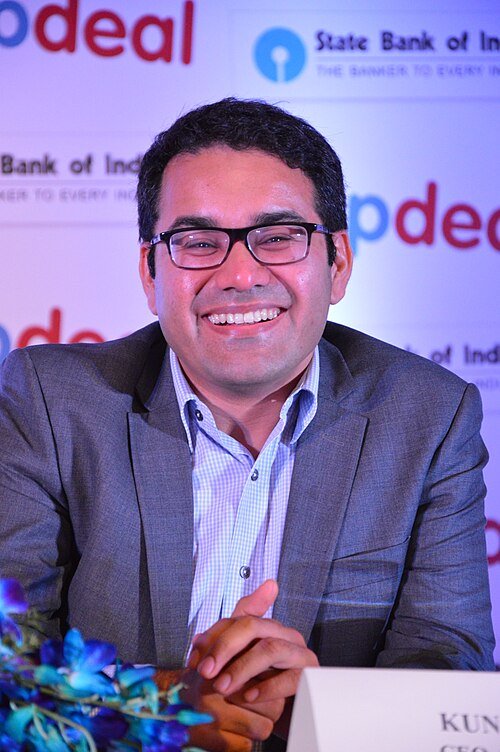
In the annals of global venture capital, few stories rival the sheer audacity and emotional drama of Kunal Bahl and Snapdeal. In 2017, surrounded by board members, aggressive institutional investors, and international media urging him to sell Snapdeal to rival Flipkart in an agonizing $900 Million fire sale, Kunal Bahl and Rohit Bansal did the unthinkable: they walked away from the deal, gave up massive personal windfalls, and embarked on Snapdeal 2.0—slashing monthly burn from $20 Million to zero, reaching profitability, and simultaneously building Titan Capital into one of the most prolific angel syndicates in Asian history.
Act I: The Wharton Rejection & The Visa Crisis
A graduate of the Jerome Fisher Program in Management and Technology at the University of Pennsylvania (earning degrees from both The Wharton School and Penn Engineering), Kunal worked at Microsoft in Seattle. In 2007, his US H-1B visa application was rejected, forcing him to leave the United States. Returning to Delhi in disappointment, Kunal reconnected with his school classmate from Delhi Public School, Rohit Bansal, resolving to build an enterprise on Indian soil.
Act II: The Coupon Booklet to The Snapdeal Marketplace
In 2007, they started MoneySaver—selling physical coupon booklets for local restaurants and salons door-to-door. In 2010, witnessing the global rise of Groupon, they pivoted to launch Snapdeal as an online daily deals site. However, during a trip to China in 2011, Kunal studied Jack Ma’s Taobao and realized that daily deals were a passing fad; the future was an open, multi-vendor e-commerce marketplace connecting small manufacturers directly to buyers.
Act III: The Multi-Billion-Dollar Funding Wars
Between 2013 and 2015, Snapdeal became the darling of global venture capital. Raising over $1.5 Billion from marquee investors including SoftBank’s Masayoshi Son, Alibaba, Temasek, and Ratan Tata, Snapdeal competed head-to-head with Flipkart and Amazon India, scaling to a peak valuation of $6.5 Billion and acquiring payment gateway Freecharge for $400 Million.
Act IV: The 2017 Existential Crisis: Walking Away from $900 Million
By 2016, a brutal capital war erupted: Amazon invested $5 Billion into India, and Flipkart raised massive rounds from Tiger Global. Caught in between, Snapdeal's burn rate reached a terrifying $20 Million per month. Major shareholders pressured the founders to merge Snapdeal into Flipkart for $900 Million. In July 2017, in an act of legendary defiance, Kunal and Rohit terminated negotiations. They sold Freecharge to Axis Bank, gave up their executive salaries, cut marketing to zero, reduced office footprints, and focused exclusively on value-conscious Bharat buyers.
Act V: The Snapdeal 2.0 Comeback
The turnaround was textbook: Snapdeal completely eliminated inventory risk, focused on unbranded, affordable lifestyle goods priced under ₹500 for Tier-2 and Tier-3 towns, and turned its core marketplace operating cash-flow positive, proving that grit and financial discipline can overcome catastrophic capital contractions.
Act VI: Titan Capital: The Midas Touch
Alongside operating Snapdeal, Kunal and Rohit established Titan Capital. Using their personal capital, they wrote early seed checks to unproven founders. Their portfolio reads like a hall of fame of Indian tech: they were the earliest backers of Bhavish Aggarwal (Ola), Harshil Mathur (Razorpay), Abhiraj Bhal (Urban Company), Varun & Ghazal Alagh (Mamaearth), and Asish Mohapatra (OfBusiness), generating hundreds of millions of dollars in realized gains.
Act VII: Industry Transformation & Strategic Legacy
- The Definitive Corporate Turnaround: Reversed an existential near-death crisis into a sustainable, cash-positive enterprise without outside bailouts.
- Prolific Angel Ecosystem Architect: Titan Capital has nurtured over 250 high-growth Indian startups, serving as the most founder-friendly seed investor in India.
- Value E-Commerce Pioneer: Decoded affordable, unbranded commerce for small-town India long before the segment was recognized by mainstream platforms.