I. The Friday Afternoon Ambush
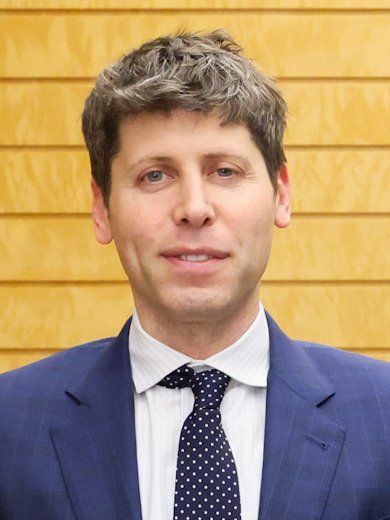
On Friday, November 17, 2023, at approximately 12:00 PM Pacific Time, Sam Altman joined a Google Meet call with members of the non-profit board of directors of OpenAI. He was not joined by his co-founder and president, Greg Brockman, who had been deliberately excluded from the calendar invite.Within seconds, the chief scientist and board director Ilya Sutskever, alongside independent board members Helen Toner, Tasha McCauley, and Adam D'Angelo, dropped a thermonuclear bomb on the tech industry.
Altman was informed that he was being terminated immediately from his role as chief executive officer and stripped of his board seat. The board's stated justification was terse and notoriously vague: Altman had allegedly been "not consistently candid in his communications with the board."
Minutes later, a formal press release was broadcast across the globe. Greg Brockman was demoted from the chairmanship and promptly resigned in protest. Chief Technology Officer Mira Murati was installed as interim CEO.
The structural tension inside OpenAI had reached its breaking point. On one side stood a non-profit board operating with statutory power to fire the chief executive and zero fiduciary obligation to commercial investors. On the other side stood the harsh economic reality of frontier artificial intelligence: an enterprise requiring tens of billions in compute, sustained by 700 world-class research minds, and completely dependent on Microsoft Azure data centers.
To the outside world and the board of directors, the firing appeared to be an irreversible coup d'état. Under OpenAI's bizarre hybrid corporate structure—where a 501(c)(3) non-profit board governed a for-profit commercial subsidiary without any fiduciary duty to commercial shareholders—the board held absolute statutory authority. Microsoft, which had invested over $13 billion into OpenAI, was given less than ten minutes of advance warning.
The board believed they had asserted moral authority over commercial accelerationism. In reality, they had made a fatal miscalculation: they confused the legal ownership of corporate paperwork with the operational control of human intellectual capital.
II. The 72-Hour Counter-Offensive
Within hours of his expulsion, Altman was operating from his private residence in San Francisco, orchestrating what would become the most devastating counter-offensive in Silicon Valley corporate history.Altman's immediate response was not defensive or emotional; it was coolly architectural. He understood the fundamental physics of frontier AI: OpenAI was not a software factory; it was a concentration of roughly fifty irreplaceable algorithmic minds. If those fifty researchers walked out the door, the non-profit entity was nothing more than an empty office building and a legal liability.
By Saturday morning, Altman had assembled a formidable coalition:
1. The Capital and Compute Anchor: Altman established direct, continuous communication with Microsoft CEO Satya Nadella. Nadella was furious at the board's reckless governance and made it clear that Microsoft's multi-billion-dollar compute cluster and intellectual property licensing agreements belonged to Sam, not to a rebellious non-profit board.
2. The Operational Leadership Core: Inside OpenAI headquarters, interim CEO Mira Murati, COO Brad Lightcap, and chief strategy officer Jason Kwon refused to comply with the board's narrative. They demanded that the board provide tangible proof of Altman's alleged lack of candor. When the board failed to deliver concrete evidence, operational leadership openly revolted.
3. The Developer and Venture Coalition: Tier-one Silicon Valley investors (including Thrive Capital, Khosla Ventures, and Sequoia) rallied behind Altman, publicly delegitimizing the board's decision and preparing legal action for the destruction of enterprise value.
By Sunday, Altman arrived at OpenAI headquarters wearing a visitor badge, tweeting a photograph with the caption: "first and last time i ever wear one of these." Negotiations for his reinstatement were underway, but the stubborn ideological rift between the board and executive leadership initially caused talks to collapse.
III. The Microsoft Move and the 95% Resignation Mutiny
On late Sunday evening, the board attempted a catastrophic escalation: they rejected Altman's terms and announced the appointment of former Twitch CEO Emmett Shear as a new, external interim CEO.Instantly, Satya Nadella executed a masterstroke of corporate strategy. At 11:53 PM Pacific Time, Nadella announced that Microsoft was creating a new, advanced artificial intelligence research lab, and that Sam Altman and Greg Brockman would lead it with unlimited compute backing.
This move completely removed Altman's downside risk. He no longer needed OpenAI; he had access to Microsoft's unlimited balance sheet and compute infrastructure.
What followed on Monday morning was the decisive blow that broke the board's back: The Staff Mutiny Letter.
Led by Mira Murati, Brad Lightcap, and key research leads, a brief, devastating open letter began circulating through OpenAI Slack channels. The letter declared:
* The board had proven incapable of overseeing OpenAI and had acted in bad faith.
* Unless the board resigned and reinstated Sam Altman and Greg Brockman, the signatories would resign immediately.
* Microsoft had assured every single OpenAI employee that a job with matching compensation was waiting for them at Altman's new lab.
By Monday afternoon, over 740 out of OpenAI's 770 employees had signed the letter.
In an extraordinary emotional twist, even Ilya Sutskever—the chief scientist who had orchestrated the original ambush—signed the document, posting publicly: "I deeply regret my participation in the board's actions. I never intended to harm OpenAI. I love everything we've built together and I will do everything I can to reunite the company."
IV. The Reinstatement and the New Boardroom Reality
Stripped of the company's entire engineering brain trust, deserted by its chief scientist, facing multi-billion-dollar lawsuits from investors, and repudiated by its primary cloud compute provider, the remaining board members had no cards left to play.If they refused to capitulate, OpenAI would cease to exist within 48 hours, leaving behind a worthless corporate shell while Altman reconstructed the exact same enterprise inside Microsoft.
On Tuesday, November 21, the board officially capitulated.
A new agreement was finalized:
* Sam Altman returned as Chief Executive Officer.
* Greg Brockman was reinstated as President.
* The original hostile board members—Helen Toner and Tasha McCauley—were permanently removed.
* A new, heavy-hitting institutional board was formed, chaired by former Treasury Secretary Larry Summers, former Salesforce co-CEO Bret Taylor, and later including Microsoft as a non-voting board observer.
Altman had not merely survived an attempted execution; he had purged his ideological adversaries, consolidated absolute operational leverage, and reconstituted his boardroom with pragmatic institutional power brokers.
V. Strategic Lessons in High-Stakes Founder Leverage
The five-day war for OpenAI remains the ultimate modern case study in founder resilience and strategic leverage. It reveals structural truths that apply to every enterprise builder:1. Human Talent is the Sovereign Asset: Corporate charters, patents, and domain names are inert paperwork. If your team will walk out the door behind you, you hold the ultimate nuclear deterrent in any boardroom negotiation.
2. Control the Compute and Capital Substrate: Altman's close alignment with Satya Nadella made him unkillable. Because the board did not own the data centers or the cash flow, they held statutory authority without physical leverage.
3. Move at Blinding Velocity in Crisis: The board thought Altman would retreat to consult lawyers. Instead, he executed a multi-vector counter-offensive within 72 hours, mobilizing staff, investors, and partners before the board could consolidate power.
4. Resist Governance Hybrids with Misaligned Incentives: Non-profit boards governing commercial capitalist engines create toxic ideological instability. If your governance structure does not align financial incentives with operational reality, it will eventually detonate.