
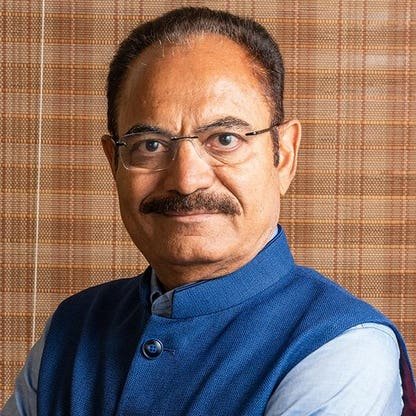
The Drought That Built an Empire
In 1974, a devastating drought swept across Jamnagar in Saurashtra, Gujarat. For the Virani family, generations of ancestral farming were wiped out in a single arid season. Forced to liquidate their remaining land, brothers Chandu, Bhikhu, and Meghji arrived in the dusty, fast-growing trading city of Rajkot with virtually nothing.Chandubhai, then a young man with zero business pedigree, took up a manual helper role at the Astron Cinema canteen. His salary was a modest ₹90 per month. His duties included sweeping floors, serving cold drinks, and distributing potato wafers.
It was in the darkened halls of Astron Cinema that Chandubhai observed the fundamental law of Indian consumer psychology.
Patrons craved fresh, savory snacks during movie intermissions. Yet the local suppliers were notoriously unreliable: deliveries were late, chip thicknesses were erratic, and chips were fried in substandard oil that left an acrid, stale aftertaste. Chandubhai recognized that the cinema owner was losing money, but more importantly, consumers were being shortchanged.
He approached the cinema management with a straightforward proposal: let him and his brothers prepare and supply the potato wafers directly.
The 10x12 Shed and the Kerosene Flame
In 1982, in a cramped 10x12 foot temporary shed behind his residence, Chandubhai set up a single manual kerosene burner, an iron cauldron, and a hand-operated slicer.Working through grueling 16-hour days, the brothers sliced potatoes by hand, deep-fried them in clean groundnut oil, seasoned them with simple rock salt and spices, and packed them into plastic packets sealed with candle flames. They delivered the packets across Rajkot on a dilapidated bicycle.
They christened the enterprise Balaji Wafers—named after the family deity Lord Balaji.
From that first rudimentary batch, Chandubhai instituted a non-negotiable operational tenet that would ultimately become his greatest defensive advantage: always provide the consumer more value than anyone else in the market.
The 30% Volume advantage: Math Over Marketing
When multinational food conglomerates like PepsiCo (Frito-Lay) entered India in the late 1980s and 1990s, they brought global playbooks: massive celebrity advertising campaigns, expensive air-conditioned distribution, and brightly colored nitrogen-filled metallic foil packaging.A standard ₹5 or ₹10 packet of chips from global giants contained roughly 60% nitrogen gas and only 25 to 30 grams of chips.
Chandubhai took the exact inverse approach. He eliminated celebrity brand ambassadors entirely. He refused to hire blue-chip advertising agencies. Every single rupee saved on corporate marketing was redirected into two places:
1. Package Weight: A Balaji packet consistently delivered 35% to 40% more volume than Frito-Lay at the exact same price point.
2. Manufacturing Precision: Reinvesting 100% of internal cash flows into automated Japanese slicing and frying machinery from Ishida and Heat and Control.
When an Indian consumer in Surat, Rajkot, or Ahmedabad walked into a kirana store with a ₹10 note, the tactile test was immediate: the Balaji pack felt heavy, dense, and full of honest product, while multinational packets felt like inflated balloons.
The PepsiCo Standoff: Defeating Global Price Wars
By the 2000s, Balaji Wafers had captured over 70% of Gujarat's organized savory snack market and was rapidly conquering Maharashtra, Rajasthan, and Madhya Pradesh.PepsiCo could not ignore the Saurashtra insurgent. The multinational launched aggressive regional price cuts and flooded local retailers with customized display racks and higher distributor margins.
The strategy failed because PepsiCo fundamentally misunderstood the relationship Chandubhai had cultivated with his distribution network:
- Negative Working Capital: While multinationals pushed 30-to-60 day credit lines that stressed distributor cashflows, Balaji operated on a lightning-fast cash-and-carry cycle. Distributors were paid promptly, and product turnover was so rapid that inventory never stayed on retail shelves for more than 72 hours.
- Retailer Loyalty: Retailers trusted Chandubhai implicitly because Balaji never squeezed margins during inflationary commodity spikes.
Frustrated by their inability to dislodge the homegrown leader, global FMCG executives flew to Rajkot with blank checks, attempting to acquire Balaji Wafers in multi-billion dollar buyout bids.
Chandubhai sat across the table, served them Gujarati tea and fresh wafers, and politely declined every offer.
"Money is easy to take," Chandubhai famously remarked. "But what happens to the 5,000 workers who built this with their sweat? What happens to the Gujarati farmers who grow potatoes exclusively for us? An empire built on trust cannot be sold for dollars."
The Technological Architecture Behind the Crunch
A common myth about traditional Indian bootstrap businesses is that they rely on archaic technology. Balaji inverted this stereotype completely.Chandubhai understood that to maintain razor-thin margins at high volumes, operational waste had to be near zero. He invested tens of millions of dollars into state-of-the-art fully automated manufacturing plants in Rajkot, Valsad, and Indore.
- Automated Optical Sorting: High-speed camera sorters inspect thousands of potato slices per minute, pneumatically ejecting any slice with blemishes or sugar burns.
- Proprietary Seasoning Tumblers: Uniform flavor application ensures every chip delivers the exact same flavor profile.
- Direct-from-Farm Contracting: Balaji contracts with thousands of farmers in Gujarat and Punjab, supplying certified seed stock and purchasing entire crop yields at guaranteed floor prices.
Today, Balaji Wafers processes more than 1,000 tons of potatoes and 600 tons of namkeen ingredients every single day. The company employs over 5,000 individuals—over 70% of whom are women from surrounding villages who manage packaging and quality assurance.
The Enduring Blueprint for Indian Bootstrapping
With annual revenues crossing ₹5,000 Crore, Balaji Wafers remains 100% family-owned, entirely self-funded, and deeply profitable.Chandubhai Virani's journey offers a timeless lesson for every modern entrepreneur seduced by venture capital burn:
1. Volume and Honesty are advantages: When you give the consumer genuinely superior value, you don't need to spend millions convincing them through advertising.
2. Distribution is Built on Honor: Fast cash turnover beats prolonged credit cycles every single time.
3. Reinvest in Core Machinery: Real defensibility comes from engineering and automation, not vanity metrics.
From a ₹90/month cinema canteen sweeper to the undisputed snack king of Western India, Chandubhai Virani stands as living proof that an authentic homegrown vision will outlast any multinational conglomerate.