
I. The Emperor of the Silicon Epoch
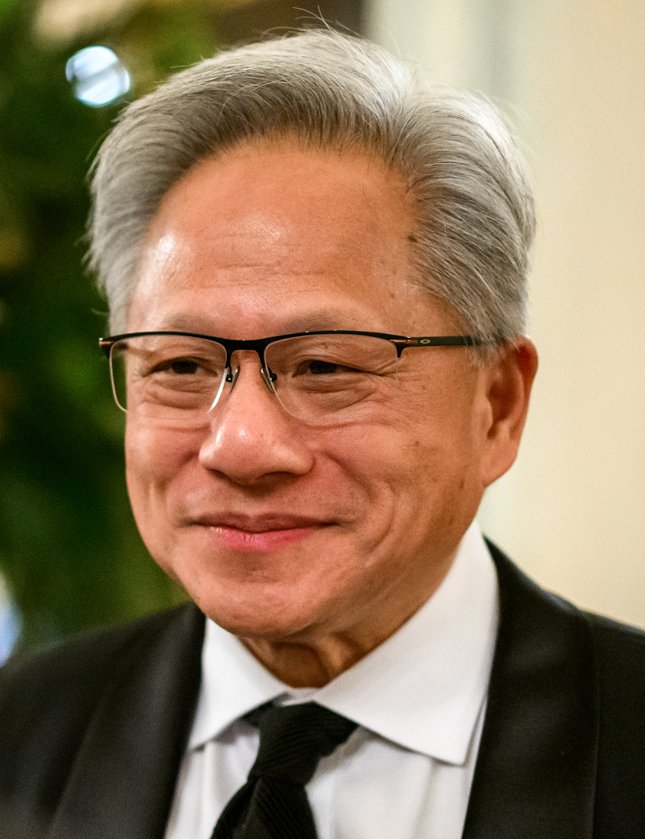
In the summer of 2024, at the height of Computex in Taipei, Jensen Huang moved through the night markets of Taiwan like a conquering hero returned from distant wars. Thousands of citizens swarmed his motorcade. Young software engineers thrust laptop lids forward demanding his sharpie autograph. Television anchors tracked his culinary preferences with breathless intensity. In Taiwan, the sixty-one-year-old immigrant who left Tainan at age nine was not merely a corporate CEO; he was the living embodiment of the island’s silicon shield—the physical manifestation of how a self-governing democracy of 23 million people had made itself indispensable to human progress.Yet three thousand miles across the Pacific, inside the secure committee rooms of the United States Capitol and the Pentagon’s Office of Net Assessment, Jensen Huang was viewed through a profoundly different lens: a single point of systemic geopolitical vulnerability.
Consider the structural paradox of Jensen Huang’s existence:
- He is an American citizen and the founder-CEO of a corporation whose market capitalization crossed $3.5 trillion—making it, by multiple measures, the most valuable commercial enterprise in human history.
- Every single cutting-edge wafer his company designs—from the monumental 208-billion-transistor Blackwell architecture down to the high-bandwidth interposers (CoWoS)—can only be fabricated by Taiwan Semiconductor Manufacturing Company (TSMC)in Hsinchu and Tainan, located less than 100 miles from the coastline of the People's Liberation Army's Eastern Theater Command.- Historically, over 20 to 25 percent of NVIDIA’s total revenuesflowed directly from mainland China, where an entire generation of developers built their technological careers upon Huang’s proprietary software ecosystem: CUDA.
No corporate executive in the history of industrial capitalism has ever stood upon a tighter, higher wire. John D. Rockefeller controlled oil refineries safely anchored in Ohio and Pennsylvania. Henry Ford built assembly plants in Michigan. Jensen Huang commands the cognitive engine of the twenty-first century from a fault line where two nuclear superpowers are preparing for potential conflict.
---
II. The Doctrine of Accelerated Silicon Sovereignty
For over three years, Jensen Huang has waged an articulate, often lonely intellectual battle against the consensus in Washington. In public lectures, off-the-record press dinners, and tense closed-door sessions with Commerce Secretary Gina Raimondo and congressional leaders, Huang delivered an unvarnished warning:"If China cannot buy chips from the United States, they will simply make them themselves. The laws of physics are not proprietary to America. If you cut off their access, you don't stop China; you merely force the Chinese government to fund, nurture, and incubate their own NVIDIAs."To Washington hawks—led by figures like former Select Committee Chairman Mike Gallagher and Commerce Department regulators—this argument was dismissed as the predictable special pleading of a CEO protecting his quarterly revenue guidance. To Washington, denying China access to frontier AI compute was an imperative of national survival: a vital measure to prevent the Chinese military from training autonomous drone swarms, optimizing hypersonic glide trajectories, and automating cyber warfare.
Yet events on the ground have demonstrated the prescience of Huang's warning. The American embargo did not freeze Chinese artificial intelligence; it ignited the greatest state-directed semiconductor mobilization in human history:
1. The Ascend Hegemony: Huawei Technologies, operating under brutal entity-list sanctions, partnered with China’s sovereign foundry SMIC (Semiconductor Manufacturing International Corporation)to roll out the Ascend 910B and Ascend 910C AI processors. While still facing packaging yield challenges, Huawei's hardware has demonstrated performance parity with NVIDIA’s A100 across standard transformer training benchmarks.2. The Domestic Unicorn Vanguard: Spurred by tens of billions in state capital from the China Integrated Circuit Industry Investment Fund ("The Big Fund"), domestic GPU challengers like Moore Threads(founded by former NVIDIA China general manager Zhang Jianzhong), Biren Technology, and MetaX have rushed to fill the void left by American hardware.3. The Software Moat Under Siege: Beijing recognized that NVIDIA’s true moat was not silicon, but CUDA—the two decades of proprietary libraries and compiler optimizations that tethered developers to NVIDIA hardware. In response, Chinese national labs launched unified open-source compiler frameworks like CANN(Compute Architecture for Neural Networks) to translate CUDA codebases into native instructions for domestic chips with minimal code refactoring.
By attempting to starve China of silicon, Washington inadvertently handed Beijing the one thing it historically lacked: a captive domestic market.Chinese tech giants like Tencent and Baidu, who previously scoffed at domestic chips due to NVIDIA's superior performance, were legally compelled to become lead customers for homegrown silicon.
---
III. The Cat-and-Mouse Game of Compliance Chips
Nowhere is the friction between commercial ingenuity and sovereign regulation more visible than in NVIDIA’s engineering gymnastics over the past twenty-four months.When the Commerce Department banned the A100 and H100 in October 2022 by establishing a 600 GB/s interconnect bandwidth ceiling, NVIDIA’s engineers did not surrender the Chinese market. Within weeks, they engineered the A800and H800—chips featuring identical computing cores, but with their NVLink interconnect bandwidth deliberately choked to 400 GB/s to comply with the letter of the law.
Chinese hyperscalers bought tens of thousands of them, spending billions of dollars in a desperate rush to secure compute before the regulatory window closed.
Furious that Silicon Valley had engineered around their restrictions, the Commerce Department updated its rules in October 2023, introducing "performance density" metrics specifically calibrated to outlaw the A800 and H800.
Undeterred, Jensen Huang returned to the whiteboard once more. In early 2024, NVIDIA debuted the H20, a drastically stepped-down accelerator optimized to squeak under the revised American limits while offering high memory capacity (96GB HBM3) to attract Chinese enterprise inference workloads.
Yet each iteration came with diminishing returns and escalating political risk. In Washington, lawmakers accused NVIDIA of prioritizing profits over national security, openly threatening to close the H20 loophole. In Beijing, Chinese state media began warning domestic companies against purchasing "downgraded" American chips, urging them to demonstrate patriotic solidarity by adopting Huawei’s Ascend processors instead.
Jensen Huang found himself trapped in the classic dilemma of the middleman: distrusted by the security apparatus of his adopted homeland, and increasingly viewed as an unreliable supplier by his largest foreign customer base.
---
IV. The TSMC Vulnerability: The Island Fortress
Beneath the software squabbles and regulatory mandates lies an irreducible geographic reality: NVIDIA cannot manufacture a single chip without Taiwan.While competitors like Intel possess their own fabrication facilities (IDMs) and AMD maintains diversified design partnerships, NVIDIA is fundamentally a "fabless" architecture firm. Its world-conquering GPUs exist as digital Verilog code until they are physically etched onto 3-nanometer silicon wafers inside TSMC’s Fab 18in Tainan, and packaged using TSMC’s proprietary CoWoS (Chip-on-Wafer-on-Substrate) technology in Taichung.
If a military blockade, naval quarantine, or kinetic conflict were to disrupt operations in the Taiwan Strait for even ninety days:
- Global production of frontier AI servers would grind to a dead halt.
- Trillion-dollar hyperscalers—Google, Microsoft, Amazon, Meta—would face a catastrophic multi-year freeze in data center expansion.
- The global transition to artificial intelligence would suffer a supply-chain shock exceeding the 1973 OPEC oil embargo by orders of magnitude.
While the U.S. government passed the $52 billion CHIPS and Science Actto subsidize TSMC’s construction of Fab 21 in Phoenix, Arizona, industry insiders know that Arizona will not rescue NVIDIA in the near term. The Phoenix facilities represent a fraction of TSMC’s Taiwanese capacity, lack the specialized advanced packaging ecosystem required for Blackwell clusters, and face persistent labor and cost differentials.
For Jensen Huang, who maintains deeply personal, generational relationships with TSMC founder Morris Chang and current CEO C.C. Wei, Taiwan is not an offshore cost center; it is the spiritual and physical womb of his life's work. Protecting that relationship while reassuring American national security planners that NVIDIA is resilient to Chinese coercion is the ultimate tightrope.
---
V. The New Corporate Sovereign: The Founder as Statesman
The targeting of Jensen Huang by Chinese counterintelligence, the illicit compute pipelines running through Megaspeed in Singapore, and the relentless escalation of U.S. export controls all point to a singular, monumental conclusion:The era of the purely commercial technology founder is over.
For fifty years, Silicon Valley operated under the Milton Friedman doctrine: the sole social responsibility of a business is to increase its profits within the rules of the game. Founders could afford to be politically naive, technologically agnostic, and indifferent to the machinations of nation-states.
Today, if you build a company at the frontier of computation, energy, biotechnology, or space exploration, you are no longer just an entrepreneur. You are a geopolitical actor. You command assets that can destabilize nuclear balances, alter the military readiness of empires, and dictate the economic sovereignty of nations.
Jensen Huang did not set out to become a geopolitical diplomat. He set out in 1993 to make 3D video games render faster on personal computers. But the relentless logic of accelerated computing transformed his 3D graphics cards into the general-purpose computational engine of human history.
As the independent investigation into NVIDIA’s executive orbit proceeds, and as Washington and Beijing brace for the next phase of the silicon embargo, Jensen Huang’s story stands as a monument to the perils of immense success. In the twenty-first century, when you build the machine that shapes the mind of humanity, you do not simply run a company. You become the prize, the target, and the battlefield.