
I. The Anatomy of an AI Cold War Breach
In the sterile corridors of Langley, Virginia, and the Hoover Building in Washington, the currency of global supremacy is no longer measured in centrifuges, stealth bombers, or naval tonnage. It is measured in floating-point operations per second, high-bandwidth memory (HBM3e) yields, and the allocation quotas scribbled in the private notebooks of a sixty-three-year-old Taiwanese-American engineer in Santa Clara, California.When *The New York Times* published its bombshell investigation on October 29, 2026, it revealed what counterintelligence officials had privately whispered for months: the world's most valuable corporation—NVIDIA, the undisputed hegemon of artificial intelligence infrastructure—had become the primary bullseye for the most sophisticated intelligence service in East Asia.
At the epicenter of the investigation was Alice Huang(also known in corporate registrations as Huang Le), a Chinese national and former managing director at Megaspeed International, a Singapore-headquartered cloud computing and data center firm. According to multiple U.S. intelligence briefings prepared across the FBI, CIA, and the Office of the Director of National Intelligence (ODNI), Alice Huang was evaluated as an active operative asset of China’s Ministry of State Security (MSS)—the formidable civilian espionage and counterintelligence apparatus answering directly to the Chinese Communist Party leadership in Beijing.
Her mission was not the clumsy physical theft of server racks or the brute-force cracking of firewalls. Rather, it was the classical, patient execution of the human intelligence (*HUMINT*) doctrine: cultivating proximity to the single individual whose technological vision and corporate decisions dictate the pace of global artificial intelligence development: Jensen Huang.
"The battlefield of the twenty-first century is not contested along the Taiwan Strait first. It is contested in the executive suites where silicon allocations are decided before the wafer ever touches an EUV lithography chamber."---
II. The Personal Confession and the Santa Clara Shockwave
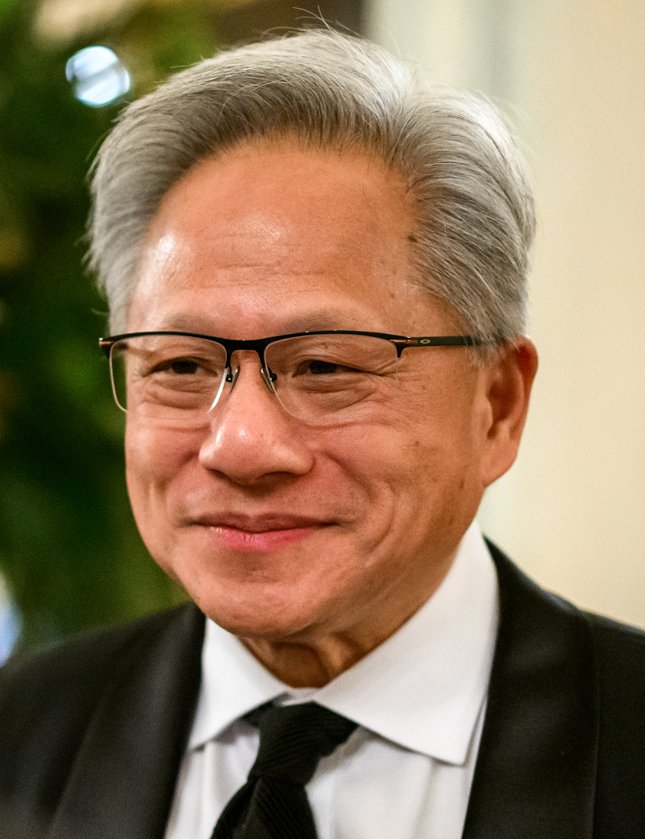
The revelations did not linger long in the realm of anonymous intelligence speculation. In an extraordinary memorandum transmitted to NVIDIA's global workforce and filed before its Board of Directors, Jensen Huang dismantled the corporate defense perimeter by addressing the human reality at the core of the scandal.Huang candidly admitted to an extramarital relationship with Alice Huang. In raw, contrite language that stunned employees accustomed to his trademark leather jacket, ferocious technical optimism, and unyielding discipline, Huang acknowledged his infidelity, offering an unreserved apology to his wife Lori—his college sweetheart whom he met as an engineering student at Oregon State University—as well as his children, his executive lieutenants, and NVIDIA’s global shareholder base.
"There is no excuse for my personal conduct," Huang wrote in the communication, taking full personal accountability while explicitly maintaining that his private failure had not breached the operational or intellectual sanctity of the company he built over three decades from a booth at a San Jose Denny's.
Yet in the high-stakes theater of American national security, personal indiscretions at the apex of critical infrastructure cannot be disentangled from corporate vulnerability. While the surname shared by Jensen Huang and Alice Huang was purely coincidental—the two have no familial relation whatsoever—their documented association dated back through several high-profile tech summits, including public appearances in Taipei during Computex 2024 and subsequent private meetings across East Asia and the United States.
For the Federal Bureau of Investigation and congressional intelligence committees, the fundamental question was terrifyingly straightforward: When the chief executive of the company powering the world's frontier AI models is compromised in a personal relationship with an asset of a hostile foreign intelligence agency, where does emotional vulnerability end and intelligence exploitation begin?
---
III. The Board Convenes: The Independent Forensic Audit
Within hours of the public disclosure, NVIDIA’s Board of Directors moved to erect a firewall between the corporation and its iconic co-founder. Recognizing the existential threat posed by potential U.S. export-control sanctions or federal debarment, the board empaneled an independent oversight committee composed exclusively of non-executive directors and backed by elite external counterintelligence and forensic legal counsel.The committee's charter was exhaustive:
- Architectural Integrity Audit: Forensically examine whether proprietary chip blueprints—specifically microarchitecture details of the Hopper (H100/H200) and Blackwell (B100/B200) families—were ever shared, discussed, or exposed during informal channels.
- Supply Chain Allocation Scrutiny: Audit every customer purchase order, shipment ledger, and executive sign-off involving Megaspeed International and its affiliated entities across Singapore, Malaysia, and Hong Kong to verify whether preferential allocation quotas or unvetted shipments bypassed standard compliance vetting.
- Digital and Communications Forensics: Secure and analyze private messaging applications, travel logs, and calendar entries to construct an immutable timeline of interactions between the CEO and Alice Huang.
Preliminary disclosures issued by NVIDIA were emphatic: the company stated unequivocally that it had found no evidenceindicating that company trade secrets, proprietary algorithms, or U.S. national security had been compromised. Corporate representatives emphasized that commercial clients—even hyper-scale purchasers like Megaspeed—are provided only standard product specifications, electrical datasheets, and commercial interface guidelines, never the crown jewels: the underlying register-transfer level (RTL) code or CUDA source repositories that govern NVIDIA's technical dominance.
Yet former intelligence officials caution that the value of an asset embedded in a founder's intimate circle rarely lies in downloading schematics onto a thumb drive. The true intelligence payoff lies in *intent, psychology, and strategic trajectory*: knowing months in advance how NVIDIA plans to respond to upcoming Commerce Department export restrictions, which third-party cloud aggregators are favored for emergency inventory dumps, and how aggressively the CEO intends to lobby the White House for relaxed export thresholds.
---
IV. The Modern Honeypot: From Cold War Berlin to Silicon Valley
To counterintelligence veterans, the targeting of Jensen Huang represents the modern digital evolution of an espionage technique as old as statecraft itself: the romantic compromise, or what intelligence historians refer to as the *honeypot* (*mian hua* in Chinese tradecraft).During the Cold War, the East German Stasi's foreign intelligence directorate under Markus Wolf deployed "Romeo spies" across Bonn and West Berlin to target lonely secretaries working in West German ministries and defense agencies. Today, the operational profile has shifted. The target is not a mid-level bureaucrat handling diplomatic cables; it is the billionaire visionary whose proprietary compute network is classified by the Pentagon as dual-use munitions grade infrastructure.
Alice Huang did not present as a shadowy intelligence operative lurking in dark corners. She appeared as a polished, cosmopolitan corporate executive: articulate, well-connected across Southeast Asian venture networks, fluent in the arcane jargon of data center cooling, power distribution units (PDUs), and token throughput. As an executive at Megaspeed International, she was positioned naturally at the epicenter of multi-billion-dollar enterprise discussions.
By anchoring herself within Megaspeed—a legitimate cloud provider deploying tens of thousands of servers across Singapore—she possessed a bulletproof commercial pretext for regular, high-level interaction with semiconductor executives. The lines between enterprise business development, social camaraderie, and intelligence gathering were deliberately blurred until they ceased to exist.
---
V. Washington Reacts: Bipartisan Scrutiny and National Security Debriefs
On Capitol Hill, the reaction was swift, bipartisan, and severe. Leaders of the House Select Committee on the Strategic Competition Between the United States and the Chinese Communist Party (CCP)and members of the Senate Select Committee on Intelligence immediately requested formal, classified intelligence debriefings from the ODNI and the FBI. Lawmakers raised pointed questions regarding the national security implications: 1. Security Clearances & Executive Advisory Roles: While Jensen Huang does not hold a traditional government security clearance, he sits on high-level advisory panels and participates in regular closed-door consultations with the White House, the Department of Defense, and the Department of Commerce regarding the National Defense Strategy and AI sovereign compute initiatives. 2. The Defense Production Ecosystem: With the U.S. Department of Defense pouring billions into Project Maven, sovereign AI defense clusters, and autonomous defense systems dependent on NVIDIA GPUs, any perceived vulnerability at the executive level poses systemic concerns for military readiness. 3. Export Control Integrity: If high-level executive relationships could be leveraged to expedite GPU deliveries to Southeast Asian intermediaries who subsequently reroute computing access to mainland China, the entire architecture of U.S. technology containment faces collapse.In a hyper-partisan Washington, the preservation of American semiconductor dominance is one of the vanishingly few issues that commands total bipartisan consensus. For NVIDIA, the ongoing congressional inquiry represents a political crucible far more treacherous than Wall Street earnings calls.
---
VI. The New Vulnerability: The Founder as Geopolitical Target
The targeting of Jensen Huang signals an irreversible paradigm shift for technology founders and venture capitalists across the globe. For decades, Silicon Valley operated under the libertarian illusion of borderless software: the conviction that code was global, capital was agnostic, and founders were citizens of a stateless digital meritocracy.That era is dead. Today, the architects of AI models, advanced lithography, quantum sensors, and synthetic biology are viewed by Beijing, Moscow, Washington, and Brussels as de facto strategic defense assets. Their private lives, travel schedules, personal relationships, and psychological vulnerabilities are subject to the same aggressive nation-state reconnaissance once reserved for nuclear physicists and four-star generals.
For Jensen Huang, the personal fallout is immense: a painful public reckoning within his family and the sobering realization that his hard-earned reputation has been drawn into the shadow world of espionage. For the tech industry at large, the lesson of the Infiltration Orbit is chilling: When you build the infrastructure that will define the future of human civilization, you no longer have the luxury of a private life.